Few people know about the original idea for OUS planned back in 2016. I fell in love with the ukulele in 2013 and set up my first ensemble “The Small Change Diaries” in 2014. I found the uke a terrific instrument to write with and of course my first uke was a pre production Collings concert which I bought in New York. I started having uke lessons in 2013 and was surprised at how most of the music I came across was of people doing cover versions. I decided to set up Original ukulele songs to seek out and bring together original artists. I fully expected this new initiative to be embraced with positivity and in many instances this was the case, but I’d not factored in how much resistance I’d get from many in the “ukulele community.” I have no problems with people playing cover versions, but without original music there would be no cover versions, so in my view its good to have a balance. This blog is written from my own observations and in talking to known UK established artists like Phil Doleman.
Early enthusiasm and support
In the early years there was a lot of interest and enthusiasm for OUS and the main site grew at some rate with scores of artists from all over the globe posting some really great material. I came across some really fantastic ensembles, mostly from overseas. I also started to realise that the ukulele didn’t have the most positive image as far as the public were concerned. My belief was that OUS would be a means to address that issue and to show what a brilliant tool the uke was to create music. As well as playing my original Collings uke I came across the amazing Shimo ukes in Japan and these proved to be gamechangers in creating my own original music.
When most people thought of the uke they thought of novelty acts like Tiny Tim or the superb Ukulele Orchestra of Great Britain who were groundbreaking in providing great entertainment in their live performances. Of course that ensemble consisted of very good musicians and the quality of playing was truly excellent.
The BIGGER plan for OUS
My other work as an international training consultant regularly took me all over the world, so this allowed me access to buying many great instruments and to meet some great artists. Now I had the site showcasing a wide range of international players, I thought about the idea of having OUS hubs overseas and to start showcasing live events for original ukulele based music.
I wanted to see if with some smart marketing I could redeem the uke image and show the public that the instrument could be used to create original music to entertain in the best possible manner. To this end I decided to run an album launch in the UK as a “pay as you feel” with my band The Small Change Diaries and have support from some well known uke artists that the public would probably not know. Yes, these artists had their niche audiences, but would the wider public accept them? The Small Change Diaries had already played a major festival overseas, The Lagoa Guitar Festival on the main stage to a sold out audience that was not uke specific and that gave me some hope that if we could get in front of the public in a gimmick free way, we could generate some real interest.
The Small Change Diaries album launch and test for the public
The Small Change Diaries album launch was the first test for the public and I picked Phil Doleman and Astraluna as support acts from the ukulele world. Phil was a nice enough guy and had been in the uke circuit for years, so he seemed a pretty safe bet. Astraluna was a local artist, also well invested in teaching and running ukulele groups locally.

There were 180 in the audience and I have my full band plus brilliant violinist Laurent Zeller sitting in for the night. My band did a great job, which included Dave Bowie Jnr who had worked extensively playing with The Ukulele Orchestra of Great Britain. I was especially interested to see audience reactions to the uke based solo artists. Astraluna was first up and she uses a lot of pedals to create a bigger soundscape. The audience seemed to enjoy the performance and she had great feedback.

Next up was Phil Doleman, doing a 35 minute set ahead of the main band. Wisely he included Laurent Zeller in a duet and that was the highlight of the set with an instrumental. The remainder of the set was met with polite applause but it confirmed my view that unless you were Eddie Vedder or were playing to a uke specific audience, most public audiences find the sound of the uke even with singing not captivating enough. Phil Doleman sat in with the band playing lap steel and that added a great dimension to the music and was well received. Its not about the talent of any artist, but rather that the sound is very specific and for non uke enthusiasts not that interesting. However, when mixed with other instruments, its a totally different matter in terms of audience reception. Double bass and percussion really fill out the sonics and the mighty uke can really cut through.
Ukulele festival appearances & experiences, Phil Doleman quote…
My third ever live music gig was playing at The Lagoa Guitar festival and it was a baptism of fire. Following that we had the chance to play at The Grand Northern Ukulele Festival which was local to us. The stipulation for all acts was that no set could be longer than 20 minutes, as the organiser commented “Ukers don’t have the concentration for anything longer than that” which I found somewhat surprising! I played this event twice, on a secondary stage and on the main stage. By this time I’d had some 1 – 1 uke sessions with Phil Doleman who famously commented in our first lesson “Nick, ukers don’t want to listen to any artist, they just want to strum” As a music lover I found this a bit odd, but in time realised that it was almost always 100% true. I heard stories of uke festivals where major main stage artists had depleted audiences as most of those attending were off strumming in side rooms and had no interest in hearing anyone play.
The standard of playing at many uke festivals was variable to say the least and only later did I start to realise that artists were often selected on the basis of being friends with the promoter rather than actual musical talent. The same artists in the UK seemed to appear at every event, and the audiences were deemed to be very much for uke enthusiasts and often more about social meet ups than for a musical experience. I noticed in recent years the actual artist line ups are not even mentioned until the last minute, despite being agreed months ago. This again suggests to me that the interest is mostly about social meet ups rather than for the actual music. That said artists like Phil Doleman and Percy Copley were very capable musicians and a cut above the average UK performer playing at live events.
As a playing artist often the technical support at uke festivals was not great and both times I played GNUF there were sound problems on stage. That said it was good experience in the early days and allowed me to start to form an opinion about the viability of OUS.
Uke wars and status seeking behaviours
I began to realise that there was a huge amount of status seeking and conflict with the UK uke community. This was especially true between the ukulele festivals. Some of this was truly bizarre including one of the organisers checking the ticket sales of another festival on a daily basis by pretending to buy huge numbers of tickets to see what allowance was still available! Another promoter used to pm me on social media also on a daily basis about what the competing festival was doing. Bearing in mind each of these events maxed out at a few hundred attendees for a weekend, the scale of this was not exactly on the scale of “South by South West”. That said, hats off to anyone running any music event, but lets also stay grounded in how we run such activities.
The challenge for many festival promoters was that there were very few uke specific artists of a high standard and most of those did the UK circuit, so many events appeared to be the same. Yes, there were some counter examples to this and some artists from overseas including Jack and The Vox really gave me some hope, but lets remember this was a duo with again a more diverses sonic range. The same applied to James Hill and his partner who also were great at engaging and entertaining audiences.
OUS stage in 2017 and deciding to disengage from “uke world”
In 2017 I sponsored a Original Ukulele Songs stage at GNUF. This cost me 400 quid and I also ran the stage for the afternoon. With the strict 20 min sets, I had 7 artists in 4 hours 20 minutes. I picked Astraluna to kick off the afternoon and had a number of other acts. Some of these I had chosen and some were insisted upon my the promoter so we made the most of it. The main challenge of the afternoon was that the main stage event announcements would suddenly pull audiences away from the other stages. One moment there would be a capacity 75 audience in the room, the next there would be 30 people left as the other 45 ran to the main stage to see another act!
The whole organisation of the festival was in my view hyperactive and was run by volunteers who were well intentioned but not often that aware of how to deal with paying customers. There was a charge for workshops as well as for the main admission, so people with families could soon find such events quite expensive. As well as organising and running the stage I paid for one artist to fly in from the USA, had him and his wife stay at my house as well as another artist who couldn’t afford a hotel, so asked if we could put him up. He asked me five times over the weekend when artists would be paid for playing, so clearly was a bit skint and I kept pointing out I didn’t deal with the finances.
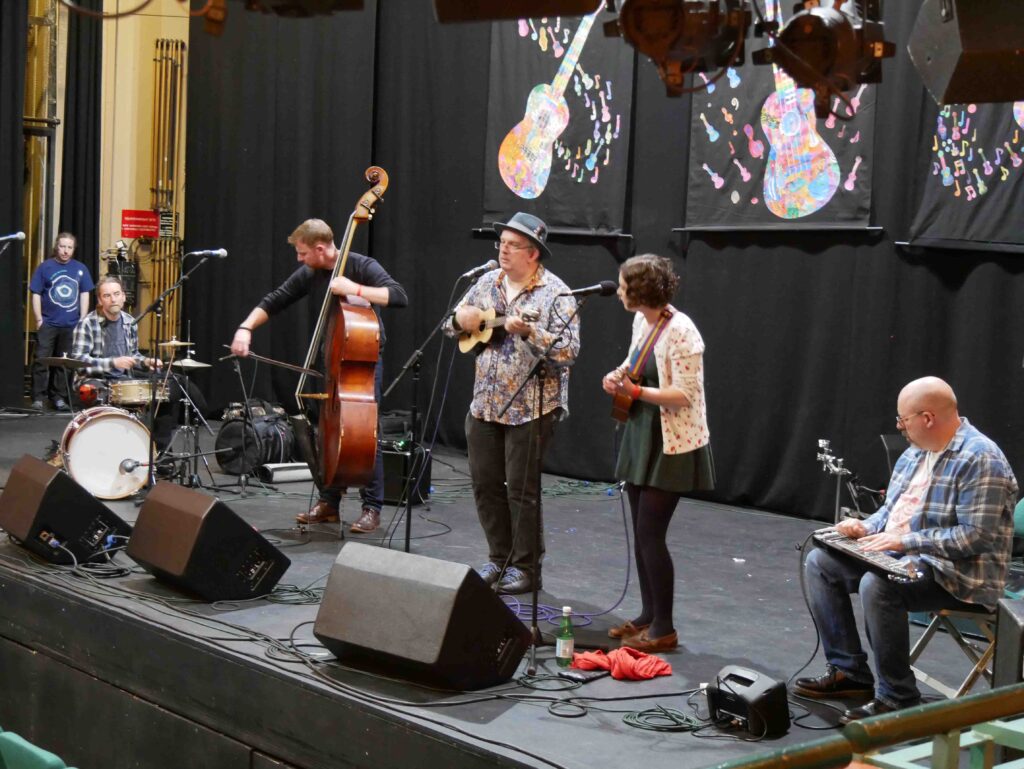
Another artist who we put up only stayed one night and managed in her 7 day UK visit from Canada to get 8 speeding tickets all directed to my house! I later found out that she’d mostly slept in her car and the hire car was in a very poor state after a number of crashes into car park pillars. As well as happily putting up artists for free and ferrying them backwards and forwards to the venue, I created a free festival CD of artists for GNUF and promoted the festival once again on the radio as well as running paid social media campaigns. The total cost of all of this was around 2000 quid and I had no problem with that as at the time I thought it a good investment in speading the word about OUS. The Small Change Diaries live mainstage set with Phil Doleman sitting in was very well received but of course like all other artists we had a strict 20 minute cap on playing time.
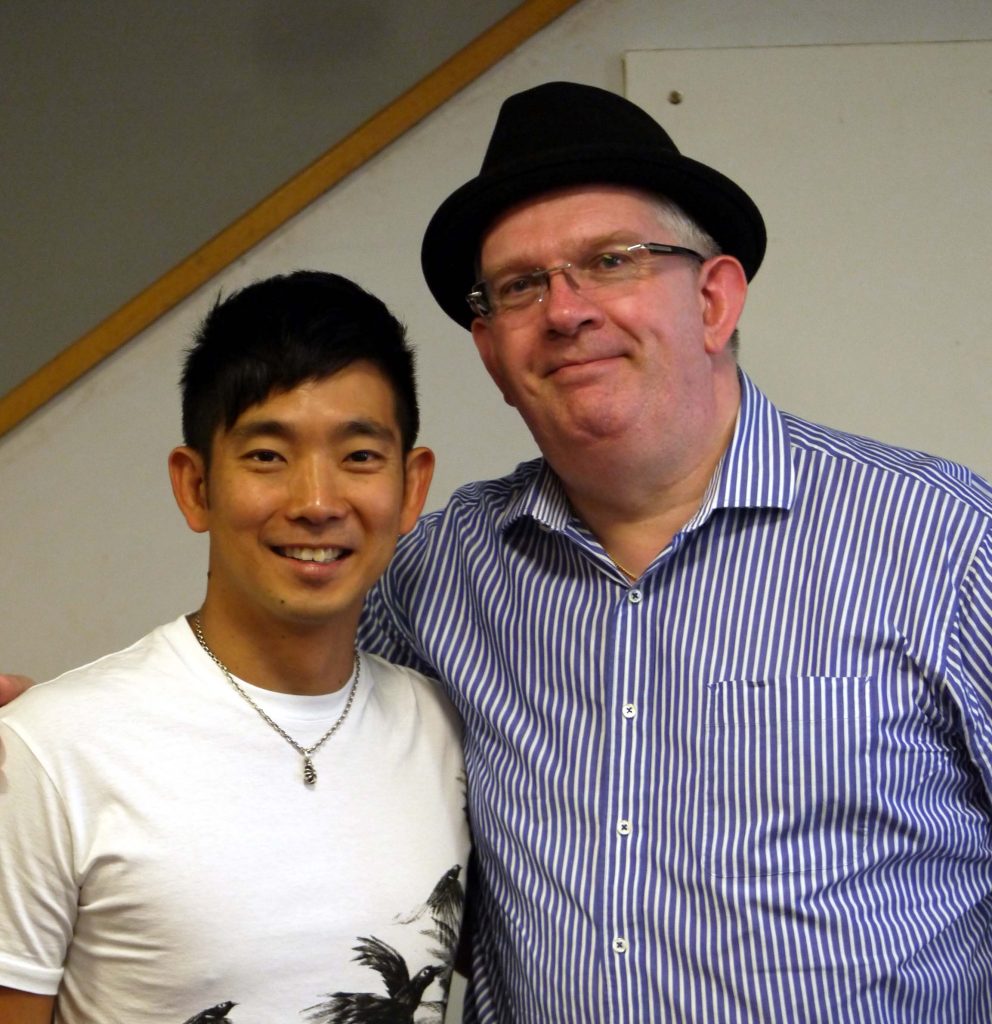
My intention had been to bring OUS stages to other events and to expand the reach across the globe. I already had sponsorship interest for this and on the ground interest in USA and Japan. I’d also started doing articles for the UK Uke magazine and had interviewed Martin Simpson as well as Bill Collings from Austin USA and wrote up on ukuleles in Japan. The magazine was well intentioned, but again reflected a very narrow view and had a pretty small circulation. I interviewed Jake Shimabukuro twice for the magazine and found him to be a great music lover with a massive awareness of all types of music. I also met his manager Van Fletcher at his house in Nashville, who was kind enough to give me a preview of one of Jake’s album not yet released.
The cover artists were mostly the same rotated each year. Those on the “UK uke circuit, Phil Dolemen, Uke orchestra of GB appeared in multiple issues. Hats off to them, but it shows what a small world the uke world is. A major fail by the magazine by relegating a great interview with Martin Simpson to the back of the magazine in favour of the usual suspects on the UK uke circuit. If I’d known in advance that they were going to do this I would have not offered to arrange the interview.
Martin is a world class musician, with 50 year’s playing experience and endless awards, a real opportunity missed. I later interviewed Martin on the Uke as seen below and he is a true music professional with decades of experience of playing to audeinces across the globe and releasing countless albums. A long way from playing the local village pub.
Post 2017 it seemed to me that it was increasingly like finding yourself in “The Wicker Man” movie where it was all very small minded and a bit strange. I also started to see the phrase “non ukers” suggesting some kind of superiority for the instrument, all a bit daft…
In the last six years both these initiatives have continued to grow, so it was the right move. I still keep the OUS site live and the social media, but made the FB page private after some really bizarre comments from some uke festival promoters. I later found out that I was just one in a long line of people experiencing such attacks and it was not uncommon for this promoter to contact artists and spout “You’re either with me, or you’re with him!” A number of people in the uke world now were to intimidated to even return phone calls, which in my view is more than a bit odd!
2024 and some characters still can’t let go…
Even though I’ve have nothing to do with the uke scene since 2017, I still get really bizarre negative comments online from some of the uke fanatics who seem provoked by the OUS platform. The latest is from a character Dave Pygot who I’ve never met but whose claim to fame seems to be playing Jolene dressed as Dolly Parton in a local pub! God bless the enthusiasm, but the whole OUS platform was to travel beyond stumming old classics in a robotic fashion. A series of very odd comments appeared on the SCD FB page, all the stranger as none of these characters could have heard the album referenced in the original post as its not been released yet!
It seems this review sent many such characters into a real frenzy, which is more than a bit odd
“This album is a mosaic of musical exploration, blending classic hits with lesser-known treasures. Cody’s approach to this project was akin to a musical alchemist, transforming and transcending genres with a simple yet profound setup: a guitar, a violin, and the harmonious interplay of two distinct voices’
A & R Factory on Covering these tracks Vol II
I welcome all manner of feedback, but I think its only reasonable to expect the person making the comments to at least have heard something first in order to make any comment!
The problem with a lot (not all) of the uke scene is that its not really about music, but more about social groups that are self reinforcing. This inevitably is usually a turn off for the wider public and it seems that increasingly the niche uke festivals are disappearing in the UK. Its strange looking back at some of what’s happened over the years and realising that you never please everybody. There are some excellent artists in the ukulele world and some fun people. That said, I realised that my idea of bringing great uke music with the emphasis on “music” to a wider world was never really going to fly, despite my best efforts!
Bye bye OUS, hello Green Eyed Records
Of course everyone has their own views but by 2017 it was clear to me that OUS was not going to reach the global audience I had hoped for and a better route was needed. I realised Phil Doleman was 100% right about the majority to uke enthusiasts.
I remain a great fan of the instrument and have many great friends who are uke enthusiasts. My band “The Small Change Diaries” this year supported Martin Simpson to a sold out audience who gave great feedback on the performance and were there purely for the love of the music. These observations are of course 100% my personal views and others may disagree. I certainly stirred up a few characters and after one online spat, every single music video of mine had 8 thumbs downs, make of that what you will? The only connection I have with uke groups is a few times a year helping support a local community group with sponsorship and gear. I am a bit fan of open and honest discussion and had many conversations with longstanding ukulele artists like Phil Doleman at his house as well as others at live events.
I can’t help but think that OUS could have been so much more, but there were too many characters resistant to anything original and/or new. I realised that my personal time is better spent building musical opportunities where there was a genuine focus on music and that resulted in setting up Music for the Head & Heart and Green Eyed Records which continue to grow and attract new audiences across the globe.
Green Eyed Records has a philosophy of “creativity through collaboration” and that typifies my views. I’m now connected to many major artists including Jim Glennie founder of James and Tim Booth the lead singer. Here’s an interview I did with Jim which of course is a whole world away from niche music, with that band selling millions of albums and selling out across the globe. OUS is still a very niche concern, but what I learned from these seasoned professionals from outside the uke world is that good manners, respect for others and hard work will always pay off in the long term and all such folks have a genuine love of music. Some of the plans for OUS including funding streams, artist sponsorship and music distribution now exist for GER for those artists who value “creativity through collaboration.” Its an absolute joy to work with such artists and although OUS never manifested as I intended, it did provide a spark for greater projects.