Archive | blog

The Original Ukulele Songs plan & why it got ditched!

Few people know about the original idea for OUS planned back in 2016. I fell in love with the ukulele in 2013 and set up my first ensemble “The Small Change Diaries” in 2014. I found the uke a terrific instrument to write with and of course my first uke was a pre production Collings concert which I bought in New York. I started having uke lessons in 2013 and was surprised at how most of the music I came across was of people doing cover versions. I decided to set up Original ukulele songs to seek out and bring together original artists. I fully expected this new initiative to be embraced with positivity and in many instances this was the case, but I’d not factored in how much resistance I’d get from many in the “ukulele community.” I have no problems with people playing cover versions, but without original music there would be no cover versions, so in my view its good to have a balance. This blog is written from my own observations and in talking to known UK established artists like Phil Doleman.

Early enthusiasm and support

In the early years there was a lot of interest and enthusiasm for OUS and the main site grew at some rate with scores of artists from all over the globe posting some really great material. I came across some really fantastic ensembles, mostly from overseas. I also started to realise that the ukulele didn’t have the most positive image as far as the public were concerned. My belief was that OUS would be a means to address that issue and to show what a brilliant tool the uke was to create music. As well as playing my original Collings uke I came across the amazing Shimo ukes in Japan and these proved to be gamechangers in creating my own original music.

When most people thought of the uke they thought of novelty acts like Tiny Tim or the superb Ukulele Orchestra of Great Britain who were groundbreaking in providing great entertainment in their live performances. Of course that ensemble consisted of very good musicians and the quality of playing was truly excellent.

The BIGGER plan for OUS

My other work as an international training consultant regularly took me all over the world, so this allowed me access to buying many great instruments and to meet some great artists. Now I had the site showcasing a wide range of international players, I thought about the idea of having OUS hubs overseas and to start showcasing live events for original ukulele based music.

I wanted to see if with some smart marketing I could redeem the uke image and show the public that the instrument could be used to create original music to entertain in the best possible manner. To this end I decided to run an album launch in the UK as a “pay as you feel” with my band The Small Change Diaries and have support from some well known uke artists that the public would probably not know. Yes, these artists had their niche audiences, but would the wider public accept them? The Small Change Diaries had already played a major festival overseas, The Lagoa Guitar Festival on the main stage to a sold out audience that was not uke specific and that gave me some hope that if we could get in front of the public in a gimmick free way, we could generate some real interest.

The Small Change Diaries album launch and test for the public

The Small Change Diaries album launch was the first test for the public and I picked Phil Doleman and Astraluna as support acts from the ukulele world. Phil was a nice enough guy and had been in the uke circuit for years, so he seemed a pretty safe bet. Astraluna was a local artist, also well invested in teaching and running ukulele groups locally.

There were 180 in the audience and I have my full band plus brilliant violinist Laurent Zeller sitting in for the night. My band did a great job, which included Dave Bowie Jnr who had worked extensively playing with The Ukulele Orchestra of Great Britain. I was especially interested to see audience reactions to the uke based solo artists. Astraluna was first up and she uses a lot of pedals to create a bigger soundscape. The audience seemed to enjoy the performance and she had great feedback.

Next up was Phil Doleman, doing a 35 minute set ahead of the main band. Wisely he included Laurent Zeller in a duet and that was the highlight of the set with an instrumental. The remainder of the set was met with polite applause but it confirmed my view that unless you were Eddie Vedder or were playing to a uke specific audience, most public audiences find the sound of the uke even with singing not captivating enough. Phil Doleman sat in with the band playing lap steel and that added a great dimension to the music and was well received. Its not about the talent of any artist, but rather that the sound is very specific and for non uke enthusiasts not that interesting. However, when mixed with other instruments, its a totally different matter in terms of audience reception. Double bass and percussion really fill out the sonics and the mighty uke can really cut through.

Ukulele festival appearances & experiences, Phil Doleman quote…

My third ever live music gig was playing at The Lagoa Guitar festival and it was a baptism of fire. Following that we had the chance to play at The Grand Northern Ukulele Festival which was local to us. The stipulation for all acts was that no set could be longer than 20 minutes, as the organiser commented “Ukers don’t have the concentration for anything longer than that” which I found somewhat surprising! I played this event twice, on a secondary stage and on the main stage. By this time I’d had some 1 – 1 uke sessions with Phil Doleman who famously commented in our first lesson “Nick, ukers don’t want to listen to any artist, they just want to strum” As a music lover I found this a bit odd, but in time realised that it was almost always 100% true. I heard stories of uke festivals where major main stage artists had depleted audiences as most of those attending were off strumming in side rooms and had no interest in hearing anyone play.

The standard of playing at many uke festivals was variable to say the least and only later did I start to realise that artists were often selected on the basis of being friends with the promoter rather than actual musical talent. The same artists in the UK seemed to appear at every event, and the audiences were deemed to be very much for uke enthusiasts and often more about social meet ups than for a musical experience. I noticed in recent years the actual artist line ups are not even mentioned until the last minute, despite being agreed months ago. This again suggests to me that the interest is mostly about social meet ups rather than for the actual music. That said artists like Phil Doleman and Percy Copley were very capable musicians and a cut above the average UK performer playing at live events.

As a playing artist often the technical support at uke festivals was not great and both times I played GNUF there were sound problems on stage. That said it was good experience in the early days and allowed me to start to form an opinion about the viability of OUS.

Uke wars and status seeking behaviours

I began to realise that there was a huge amount of status seeking and conflict with the UK uke community. This was especially true between the ukulele festivals. Some of this was truly bizarre including one of the organisers checking the ticket sales of another festival on a daily basis by pretending to buy huge numbers of tickets to see what allowance was still available! Another promoter used to pm me on social media also on a daily basis about what the competing festival was doing. Bearing in mind each of these events maxed out at a few hundred attendees for a weekend, the scale of this was not exactly on the scale of “South by South West”. That said, hats off to anyone running any music event, but lets also stay grounded in how we run such activities.

The challenge for many festival promoters was that there were very few uke specific artists of a high standard and most of those did the UK circuit, so many events appeared to be the same. Yes, there were some counter examples to this and some artists from overseas including Jack and The Vox really gave me some hope, but lets remember this was a duo with again a more diverses sonic range. The same applied to James Hill and his partner who also were great at engaging and entertaining audiences.

OUS stage in 2017 and deciding to disengage from “uke world”

In 2017 I sponsored a Original Ukulele Songs stage at GNUF. This cost me 400 quid and I also ran the stage for the afternoon. With the strict 20 min sets, I had 7 artists in 4 hours 20 minutes. I picked Astraluna to kick off the afternoon and had a number of other acts. Some of these I had chosen and some were insisted upon my the promoter so we made the most of it. The main challenge of the afternoon was that the main stage event announcements would suddenly pull audiences away from the other stages. One moment there would be a capacity 75 audience in the room, the next there would be 30 people left as the other 45 ran to the main stage to see another act!

The whole organisation of the festival was in my view hyperactive and was run by volunteers who were well intentioned but not often that aware of how to deal with paying customers. There was a charge for workshops as well as for the main admission, so people with families could soon find such events quite expensive. As well as organising and running the stage I paid for one artist to fly in from the USA, had him and his wife stay at my house as well as another artist who couldn’t afford a hotel, so asked if we could put him up. He asked me five times over the weekend when artists would be paid for playing, so clearly was a bit skint and I kept pointing out I didn’t deal with the finances.
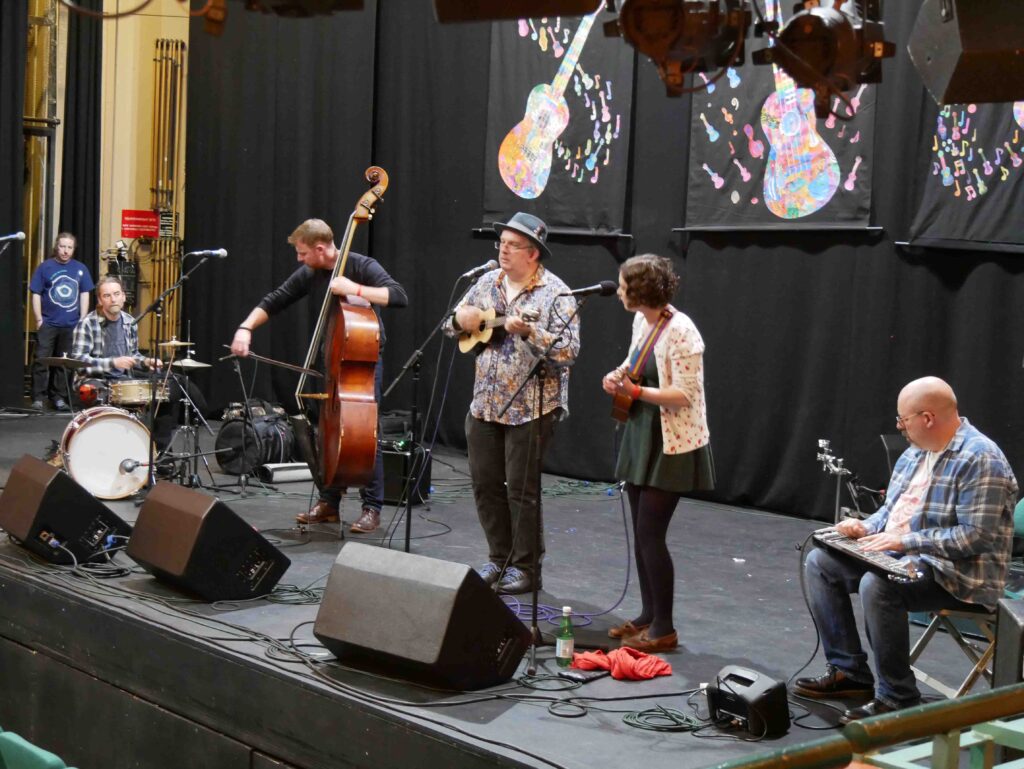
Small Change Diaries GNUF 2017 with Phil Doleman
Small Change Diaries at GNUF with Phil Doleman

Another artist who we put up only stayed one night and managed in her 7 day UK visit from Canada to get 8 speeding tickets all directed to my house! I later found out that she’d mostly slept in her car and the hire car was in a very poor state after a number of crashes into car park pillars. As well as happily putting up artists for free and ferrying them backwards and forwards to the venue, I created a free festival CD of artists for GNUF and promoted the festival once again on the radio as well as running paid social media campaigns. The total cost of all of this was around 2000 quid and I had no problem with that as at the time I thought it a good investment in speading the word about OUS. The Small Change Diaries live mainstage set with Phil Doleman sitting in was very well received but of course like all other artists we had a strict 20 minute cap on playing time.

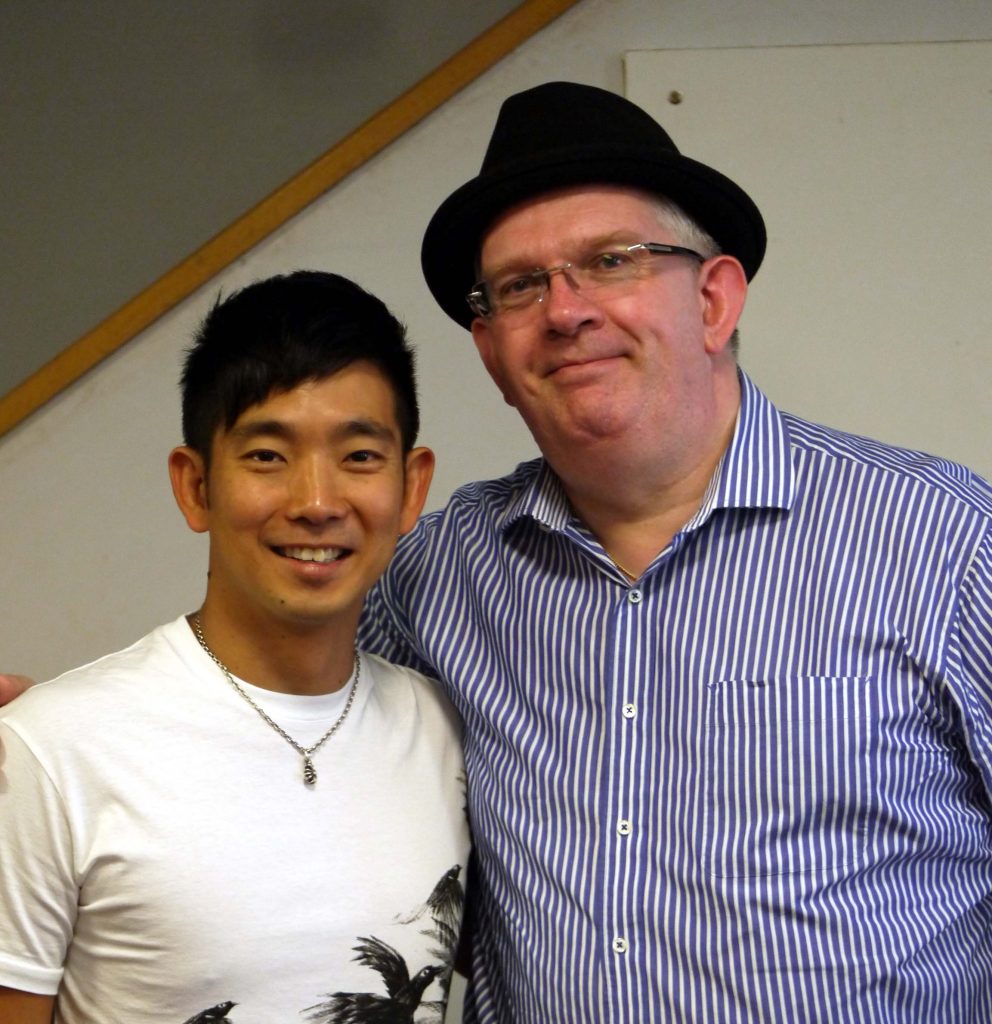
My intention had been to bring OUS stages to other events and to expand the reach across the globe. I already had sponsorship interest for this and on the ground interest in USA and Japan. I’d also started doing articles for the UK Uke magazine and had interviewed Martin Simpson as well as Bill Collings from Austin USA and wrote up on ukuleles in Japan. The magazine was well intentioned, but again reflected a very narrow view and had a pretty small circulation. I interviewed Jake Shimabukuro twice for the magazine and found him to be a great music lover with a massive awareness of all types of music. I also met his manager Van Fletcher at his house in Nashville, who was kind enough to give me a preview of one of Jake’s album not yet released.
The cover artists were mostly the same rotated each year. Those on the “UK uke circuit, Phil Dolemen, Uke orchestra of GB appeared in multiple issues. Hats off to them, but it shows what a small world the uke world is. A major fail by the magazine by relegating a great interview with Martin Simpson to the back of the magazine in favour of the usual suspects on the UK uke circuit. If I’d known in advance that they were going to do this I would have not offered to arrange the interview.

Martin is a world class musician, with 50 year’s playing experience and endless awards, a real opportunity missed. I later interviewed Martin on the Uke as seen below and he is a true music professional with decades of experience of playing to audeinces across the globe and releasing countless albums. A long way from playing the local village pub.

Post 2017 it seemed to me that it was increasingly like finding yourself in “The Wicker Man” movie where it was all very small minded and a bit strange. I also started to see the phrase “non ukers” suggesting some kind of superiority for the instrument, all a bit daft…

In the last six years both these initiatives have continued to grow, so it was the right move. I still keep the OUS site live and the social media, but made the FB page private after some really bizarre comments from some uke festival promoters. I later found out that I was just one in a long line of people experiencing such attacks and it was not uncommon for this promoter to contact artists and spout “You’re either with me, or you’re with him!” A number of people in the uke world now were to intimidated to even return phone calls, which in my view is more than a bit odd!

2024 and some characters still can’t let go…

Even though I’ve have nothing to do with the uke scene since 2017, I still get really bizarre negative comments online from some of the uke fanatics who seem provoked by the OUS platform. The latest is from a character Dave Pygot who I’ve never met but whose claim to fame seems to be playing Jolene dressed as Dolly Parton in a local pub! God bless the enthusiasm, but the whole OUS platform was to travel beyond stumming old classics in a robotic fashion. A series of very odd comments appeared on the SCD FB page, all the stranger as none of these characters could have heard the album referenced in the original post as its not been released yet!

It seems this review sent many such characters into a real frenzy, which is more than a bit odd

“This album is a mosaic of musical exploration, blending classic hits with lesser-known treasures. Cody’s approach to this project was akin to a musical alchemist, transforming and transcending genres with a simple yet profound setup: a guitar, a violin, and the harmonious interplay of two distinct voices’

A & R Factory on Covering these tracks Vol II

I welcome all manner of feedback, but I think its only reasonable to expect the person making the comments to at least have heard something first in order to make any comment!

The problem with a lot (not all) of the uke scene is that its not really about music, but more about social groups that are self reinforcing. This inevitably is usually a turn off for the wider public and it seems that increasingly the niche uke festivals are disappearing in the UK. Its strange looking back at some of what’s happened over the years and realising that you never please everybody. There are some excellent artists in the ukulele world and some fun people. That said, I realised that my idea of bringing great uke music with the emphasis on “music” to a wider world was never really going to fly, despite my best efforts!

Bye bye OUS, hello Green Eyed Records

Of course everyone has their own views but by 2017 it was clear to me that OUS was not going to reach the global audience I had hoped for and a better route was needed. I realised Phil Doleman was 100% right about the majority to uke enthusiasts.

I remain a great fan of the instrument and have many great friends who are uke enthusiasts. My band “The Small Change Diaries” this year supported Martin Simpson to a sold out audience who gave great feedback on the performance and were there purely for the love of the music. These observations are of course 100% my personal views and others may disagree. I certainly stirred up a few characters and after one online spat, every single music video of mine had 8 thumbs downs, make of that what you will? The only connection I have with uke groups is a few times a year helping support a local community group with sponsorship and gear. I am a bit fan of open and honest discussion and had many conversations with longstanding ukulele artists like Phil Doleman at his house as well as others at live events.

I can’t help but think that OUS could have been so much more, but there were too many characters resistant to anything original and/or new. I realised that my personal time is better spent building musical opportunities where there was a genuine focus on music and that resulted in setting up Music for the Head & Heart and Green Eyed Records which continue to grow and attract new audiences across the globe.

Green Eyed Records has a philosophy of “creativity through collaboration” and that typifies my views. I’m now connected to many major artists including Jim Glennie founder of James and Tim Booth the lead singer. Here’s an interview I did with Jim which of course is a whole world away from niche music, with that band selling millions of albums and selling out across the globe. OUS is still a very niche concern, but what I learned from these seasoned professionals from outside the uke world is that good manners, respect for others and hard work will always pay off in the long term and all such folks have a genuine love of music. Some of the plans for OUS including funding streams, artist sponsorship and music distribution now exist for GER for those artists who value “creativity through collaboration.” Its an absolute joy to work with such artists and although OUS never manifested as I intended, it did provide a spark for greater projects.
Does Covid 19 mean the end of Uke festivals?

Covid 19 has been a gamechanger in terms of all group events and of course ukulele live festivals have all understandably been wiped out. As someone who is married to a medic and who in my non musical life is working with virology PHD students, I realised back in January we are in for a big problem.

Every musician I know has had ALL gigs cancelled and all festivals around the world are cancelled. The more optimistic folks will think of such events as “postponed” and many understandably are hoping ticket purchasers will either waive a refund or transfer into a rescheduled event in 2021.

The problem globally is that without any medical solution, social distancing will remain in place for some time. Indoor events like theatres may be allowed 25% capacity but as with indoor festivals, that’s not really economically viable. Outside festivals may have a better chance of course, but they will IMO not be the same.

Most uke events are social as opposed to music based and “mass jams” etc don’t really work in a live capacity in the same way. The other issue is that once people start feeling apprehensive about any danger of being in large groups that will reduce interest. Another challenge is that with the inevitable change in the economy, many people may not be able to afford the luxury of attending such events. A weekend ticket may be 50 pounds per person, add in accommodation, food, travel and workshops and you can quickly reach many times that figure

Online “festivals?”

There have been some attempts to translate the festival experience to an online format. One live streaming event was well conducted, but pre recorded clips of artists playing at hope are lets face it, a very long way away from a true “festival experience” Nothing wrong with the medium but its really watching video footage with no live interaction that is at the core of any festival experience

Conclusion

Nobody knows what will happen in the next two years. I suspect all festivals cancelled in 2020 will also be cancelled in 2021 unless a major medical solution is found and then dispensed to the greater public inside 12 months. I feel for all those people financially involved in running such events and I suspect many that are often run on a shoestring with Arts funding, will disappear as they won’t be viable. New online formats may appear, but I suspect the live mass gatherings will be on hold for some time to come.

The main thing for now is STAY SAFE. Yes, mass meets are fun, but the possibility of death does reduce my enthusiasm for any attendance!

NC

2

Ukulele skills development anyone?

Five years ago I first picked up a ukulele, having bought a wonderful Collings pre production concert uke in New York. After 18 months of playing around with it, I decided to get some proper instruction. I eventually found a local teacher, but I was amazed at the lack of available teachers for a 1 – 1 basis.

I have often blogged about how the uke can be mostly a focul point for social meet ups and strum alongs and there’s definetely a place for that. In fact this Friday I’ll be sound engineer for a local uke group playing an evening of cover versions. I’ve done this many times before and its a fun night.

I also read today that Sore Fingers were struggling to get more than four people to attend their skills development workshop in 2019. They need a minimum of ten people to make a class viable and so far only four have shown definate interest. In a country where there seems to be a “uke festival” every few weeks, this seems like a terrible response but it does confirm my theory that many who pick up the uke, do so just to learn a few chords and strum along with friends. Most festival acts play cover versions and some attempt the comedic quirky route which personally I’m not a fan of, but there seems to be a real appetite for that. Yes, there are some workshops, but these are usually 60 minutes only and at the last one I attended the presenter commented “I really thought we be a lot further on than we are” during his slot, clearly surprised at the lack of musical skills from the audience.

There’s a lot of uke discussion online and an abundance of questions asking for advice. Many seem to think that watching youtube videos is the way to go, but I would always advise seeing a live human being. Phil Doleman remains a beacon of hope for ukulele education and wrote an article for the site here – http://www.originalukulelesongs.com/thoughts-learning-play-uke-internet-phil-doleman/

Matt Stead also is a driving force in teaching the uke in the UK and his Uke Room is a great place to learn and develop skills. You can find him here https://theukeroom.com/

Overseas James Hill has been a driving force in showing people the possibilities for the instrument and is once of the few ukulele players that crosses over to attract wider publci appeal.

Personally I think the ukulele is a brilliant instrument, and my hope is that the UK ukulele community can generate enough enthusiasm so a 2019 Sore Fingers workshop can take place. I guess we’ll know by the Friday deadline…

11

The Case Against Contests by Mike Turner

One of the “opportunities” that the Internet and social media sites have made available to songwriters as never before, is the songwriting competition. Some believe as Enzo Ferrari (the noted Italian carmaker) said, “Competition improves the breed” – that we as individual songwriters, and song in general, will become “better” through competition.

   Others – and this is the camp I’m in – believe that, as an artistic means of expression and communication, songwriting doesn’t lend itself to a competitive evaluation of which is “best;” and that most songwriting contests do little if anything to improve one’s technical craft. Let me explain why.

  The difference between Senior Ferrari’s field, and ours, has to do with the criteria used for judging. In the auto world (and I grew up in Detroit, and worked closely for years with the automotive industry, so I’ve had some exposure to the auto industry), and particularly in racing, there are objective criteria which can be used to measure and compare vehicle performance: which car is capable of the highest speed? Which crosses the finish line first? Which stops in the shortest distance? Which car sells the most units? These and similar objective criteria can be used to compare one car to another and determine which car is the “best” or is the “winner.”

  In the music world, there are objective criteria as well – but they tend to lend themselves to performance, versus the creative act of songwriting. For example, between two trumpet players, who hit a given note more cleanly? Who better keeps time over the course of a given piece? Again, objective criteria, as in, “The tempo is 80 beats per minute – who better achieve that timing over the course of the four-minute piece?”

  But in matters of artistic creation, objective criteria tend to fall away. Let’s think about cars again – which is more beautiful, a 1986 Ferrari or a 1936 Packard? Different, cars, different styling cues – and two different people can give two diametrically-opposed answers to the question of “prettier” based on their own tastes, judging criteria, etc

  The same for a song – each listener hears and interprets a song through the lens of their own musical tastes and experience, to determine if they “like” a song or not.

  There are of course some technical, “craft” considerations that we as writers may evaluate a song against – say, in structure, or in the avoidance of forced rhyme, or in the creation of a storytelling arc. We certainly employ those criteria when critiquing an individual song – but that’s to compare an individual song to those craft criteria, not to judge whether one song does so better than another. And of course, the average, non-writer listener doesn’t look to these craft criteria in judging whether they “like” a given song.

  In the case of songwriting contests, while judges may to a degree use some craft criteria in evaluating a song (certainly, they’ll mark down a song that evidences poor craft, such as inconsistent structure, forced or cliched rhyme, etc.), how can one then say whether one song or another made “better” use of craft? That one tells its story “better” than another? The criteria become far too subjective to carry meaning.

  And here’s my real rub with songwriting contests (and, yes, in earlier days I’ve entered a few): other than “winning,” there’s virtually no feedback to the writer on what the judges found “good” or “bad” about their song. Even if one wins or places (and, yes, I have), there’s no feedback as to “why” one did so.

  How can a writer, or songwriting in general, improve through competition, if we’re not told what the judging criteria were, or how we stacked up against those criteria? If I win a competition, does that mean that I should write all my future songs in the same way as my “winner”? The next judge in the next contest may look at the exact same song as my winner, or my future clones, and subjectively judge that this one isn’t a winner.

  Note that I’m making a distinction between contests, and peer review (as we find in some FaceBook groups, or songwriter associations). Peer review can provide meaningful feedback on songwriting craft – chiefly because (a) the criteria are somewhat objective and established (structure, rhyming patterns, etc); (b) individual songs are evaluated against the criteria, not against one another; and (c) the writer gets actual feedback from the critiques, not simply a “win/lose” notification.


   Two final points: first, many songwriting contests are actually “singer/songwriter” contests – decisions are based not just on the song, but on its performance and even sometimes on the technical production of the audio/video recording used as an entry. So, from a writer’s perspective, some judging may have nothing to do with the quality of the song itself.


   And, particularly in the FaceBook world, more and more “contests” are starting to be based on votes – which means that “winning” may be a factor of how many family and friends (and even yourself!) cast votes (repeatedly), not necessarily on the merits of the song itself.

   In my view, the music world is already competitive enough, particularly if one is in the business end of album sales, gigging, touring, etc. That’s a tough enough row to hoe. Artificially creating more competition, through songwriting contests that don’t provide any meaningful feedback to help writers grow their craft, isn’t in my mind an effective way of developing as a songwriter.

  Others, of course, may disagree – and there’s room enough in the tent for all of us. But I would suggest that, if one is interested in growing their songwriting craft, there are better ways – participating in peer reviews and critiques; studying other writers’ works; and writing, writing and writing – of doing so.


4

The Covert Pop Songwriter by Derek Reynolds

My name is Derek and I am a solo acoustic singer-songwriter. That is the story and I’m sticking to it… oh, also I perform with a ukulele.

People have written SO extensively about the problematic image the ukulele has with musicians that I won’t dwell on it However I find it interesting that even the primary and obvious use of ukulele in hits by Vance Joy, Twenty One Pilots, Train, Young The Giant and Bruno Mars haven’t really helped the public perception of the little 4-stringer. There is not a uke to be found in either of the official videos for Vance Joy’s big hits Saturday Sun or Riptide, which are both played on the uke. So we can assume that Vance’s management definitely understands the issue. Even though I applaud Vance Joy’s YouTube videos where he seems to usually be on one of his ukuleles, thank you James Gabriel Keogh! And YES, Eddie Vedder came out of the closet and released the Ukulele Songs album. Hooray! But not so much, here is what Rolling Stone said: “The ukulele doesn’t allow for the widest range of expression, which makes it a challenging foil for Eddie Vedder, who never met a feeling he couldn’t drive through a wall. But this uke-suffused album stands up because he adapts the instrument to his idiosyncratic needs.” When have you EVER read an album review that blamed the instrument for the shortcomings of the music? As a person who HAS released a solo acoustic ukulele album, much Like Eddie’s, I can attest that he did not even scratch the surface of what the instrument can do. Can we admit our lovely ukulele has a PR problem? Absolutely yes. Is it fixable? or does it really NEED to be fixed?, that is a bigger question that plays back to being a musician in the first place.

I don’t say I play the ukulele and the “U” word does not appear prominently on my website. But that is just so people don’t turn away before hearing my music. Once people hear your music it shouldn’t matter what you are playing ON if they find a connection with what you’re playing. If the songs matter the medium becomes a non-issue. And I think that is what a lot of online performers are missing. Learn your instrument, develop songs (original or covers), make them musical, dynamic and interesting. Then go play your music live and see what gets a response. Put yourself emotionally into your songs, be honest, be yourself and make the audience part of your music then you will find the people that “get” what you’re doing. A lot won’t get it but the ones that do are your fanbase, at that point, it becomes a numbers game. And there is no faking it when you are playing a three hour set of 40 songs because it is exhausting.

I play a fair amount of Farmers Markets which sell locally sourced produce, meat, furniture, pottery paintings, etc… The “Local Grown” movement is big in these parts and as far as I’m concerned music is part of that. Just because you can post a video to thousands of people all over the world with social media tools you are not really building fans. Start local, the real fans come from an emotional connection with your art so get out and play for them. That is the work that goes into being a performing musician and it is and SHOULD be hard and occasionally frustrating. That’s how you learn. I think it’s a concept that seems to be losing ground because it is SO easy to just cut a 55-second video and post it. But there is no real connection to your audience in that format, no shared vulnerability of a live show. So if you get lots of online attention for your music try posting a lyrics-only video of a song and see how that affects your numbers. It’s a good litmus test to see if you have followers or fans.

So get out there and show people that your ukulele is more than just a gimmick or a social strum-along toy. It was born of an old Portuguese instrument and proudly honed for 100 years by Hawaiian artists and luthiers all over the world. It has a long and proud tradition so make real music with it, write songs on it, go play shows for people who really aren’t expecting what you are about to do, be brave. Get off the web attention-fix and make your OWN music. It’s not easy but it is definitely worth it and the whole ukulele community will thank you for it.

Derek Reynolds

—
Derek Reynolds
503-902-8353
http://unexpected-ukulele.weebly.com
https://www.facebook.com/unexpectedukulele/

3

Ukulele builder and lover – John Doug Dumle

I started out playing ukulele just over 1 year ago and really enjoyed it but, I wanted to do more. I saw that people were building cigar box guitars and thought I would give a cigar box uke a try. The first one was cool but I enforced the face and it killed the sound. I talked to someone that repaired and worked on stringed instruments and ask for advice. He showed me a cut away of the inside of a guitar and explained that uke strings and steel guitar strings are very different. So back to the shop and the next one sounded a lot better and as I continued to build they got better looking and the sound was getting better. I have used several different types of wood for the neck and even built my own boxes. I have a 8 string with a ceder box and a cherry neck that i believe sounds great. I have even added pickups to some of my ukes.

A few months back we were in Maui and a friend said “Pick up some Koa while your there. It will be cheeper than here in Colorado.” I have also got pointers from several luthers and have continued to improve on my builds. I have now completed 2 traditional style ukuleles (1 tenor size, and 1 soprano size) they look and sound beautiful.

My next project is a Ubass of maple and walnut. I am not much of a player but am getting this build thing together. It has been very rewarding and great for stress management. To date I have about 35 cigar box builds and 2 traditional styles and I don’t see this ukulele addiction going away any time soon.


0

The Greatest Day by Jake Shimabukuro

In 2017 I was lucky enough to be invited by Van Fletcher, Jake’s manager to his house in Nashville to listen to the latest mixes of the new Jake album. Interviewed Jake in the UK in 2016 and we had a fascinating discussion about music and it was clear to me that he has a great love of all kinds of music. Of course Jake is well known for his brilliant Queen and Beatles covers and I had his excellent Nashville album. Now he has released The Greatest Day and its excellent.
The new album is a brilliant choice of material with some fantastic guest musicians, including Jerry Douglas who is on three tracks – If 6 Was 9, Eleanor Rigby and Go For Broke
Jake commented
“It was such an honor to have Jerry guest on the record” He was only going to play on one tune, but we had such a great time that he stayed and played on two more tracks.”

You can preorder online here 

Here is the tracklisting
  1. Time of the Season
  2. The Greatest Day
  3. Eleanor Rigby
  4. Pangram
  5. Bizarre Love Triangle
  6. Straight A’s
  7. If 6 Was 9
  8. Shape of You
  9. Go For Broke
  10. Little Echoes
  11. Mahalo John Wayne
  12. Hallelujah
I have long maintained that the ukulele is a terrific instrument, but often many (not all) ukulele players don’t explore more of its real potential. This album is a brilliant example of pushing the sonic boundaries and raises the bar for all ukulele players, but then Jake is far from just a ukulele virtuoso. In my opinion he is a superb musician who just happens to play the ukulele.
The album has a diverse range of material and kicks off with the great Zombies song “Time of the season” which has a fantastic melodic hook. The production is excellent on this track and throughout the album. The rhythm part reminds me of something Michael Jackson might arrange, a really great driving beat. The Greatest Day is a Jake composition and swings wonderfully with Jake’s part soaring in the mix. There’s also a great use of effects on the uke, which I’m not usually in favor of, but here it works really well. As with all the other tracks on the album, there is a real consideration to sonic dynamics which is essential especially for instrumental work. Few artists truly pull this off.

The title track “The Greatest Day” follows and here’s Jake talking about it

I know Jake has a love of Beatles music and Eleanor Rigby is really well arranged and sounds great especially with Jerry Douglas. I’ll kill to see Jake and Jerry play live as they work brilliantly together. “If six was nine” is where Jake takes this album to a whole new level. The playing is superb and I suspect Jimi would have approved.

The challenge for uke players in playing guitar classics is to do something new. Otherwise why not just play the guitar? On this version, there’s, a great arrangement and this could sit comfortably on “Electric Ladyland” which from me is the ultimate compliment. Jake’s playing throughout is wonderfully fluid with a lot of dynamics. He’s been described as “the Jimi Hendrix of the ukulele”, but I think of him more as “The Eric Johnson of the uke” Both musicians are world class and have a very distinctive sound.
“Straight As’ is an original composition by Jake and has a great feel. Its good to see Jake writing his own original material and continuing to explore new sound combinations.

The album concludes with Hallelujah another great cover of a classic song. Those who know me, know that generally, I favor original material, but Jake is a rare individual who has the talent and creativity to bring something entirely new to such great tunes. He literally set the world alight with “While my guitar gently weeps” and I was blown away by Bohemian Rhasphody on his Ted talk. The Greatest Day will in my view continue to showcase the magic of the tiny uke to a much wider public, which is most welcome. He’s also on a trajectory for exploring new territory and that is always the sign of a smart musician.
Clearly, a great deal of time and care has gone into this recording and it shows in the result. Jake is touring extensively in the USA and Asia and audiences are in for a treat.
1

The importance of encouragement and good manners


I set up OUS almost 3 years ago with the purpose of bringing together ukulele artists interested in creating original music. The FB site was the initial platform and then we set up this main OUS site. This was from what I see the first site dedicated to this end and its a fair amount of time and money investment to keep it all live. In fact a few months back the main site crashed due to traffic as we blew the bandwidth.

I have always adopted a policy of thanking people for their work, no matter how busy I am or where I am on the planet. On average I am in a different country every 6 weeks, often in different time zones. Alan Thornton and Cody Reeson help administer the FB site. On the main site we welcome artists in having their own pages and to date 127 have taken up the offer. We also invite guest blogs and articles and many have contributed thoughts including Phil Doleman, Mike Turner, Percy Copley and many others.

The platforms are advert free and there is no pleading for PayPal contributions to keep this all live. OUS has also sponsored uke festival stages, give away samplers, live charity events, musician travel, musician accommodation and many other initiatives. All this is done to encourage new music creation. I think some people would be surprised at the amount of financial investment in creating artist opportunities, but I am happy to do this as longs as there is enthusiasm for people creating original songs.

Next year we’ll be launching “Music for the Head and Heart” which is much bigger than OUS and not confined to any niche instrument. Of course, neither OUS or new the platform will be to everyone’s tastes and that’s fine. In the uke world, there are all kinds of politics and of course commercial interests that shape opinion. This is often the main focus of social media, but its not the focus of OUS. I mostly stay away from all that nonsense but will always stand up for OUS if people hurl negative posts and especially when these are fabricated.

I always welcome discussion and of course, people can pm any comments rather than try to be the centre of attention in some flame war online that serves no positive purpose. There are plenty of online groups for all that stuff. There is also a small group of characters who seem threatened by the whole concept of OUS, which is a bit odd to say the least. The often fostered image of one “ukulele community” is IMO total fiction. In reality, there are many completing commercial and artistic interests and all too often there’s not plenty of selfless actions and genuine encouragement, which is a sad reflection. Fortunately, there are a few beacons of hope and that’s the good news!

Some of the comments on social media defy belief and at times it’s like watching the lastest walk back in current Trump based  White House with a number of fabrications spouted online.

One recent example from a character who criticised OUS, was on the platform, left and then tried to apply again but was refused because of his history of online behavior commented –

“I was thrown out, because I didn’t agree with him.”

NOBODY has ever been “thrown out” or off the forum for not agreeing with myself or anyone else.

In fact, it’s quite the opposite! Discussion and debate are always welcome as is honesty and good manners. I don’t think its too much to ask for.

I blogged about this earlier this year on my personal site and little has changed – http://nickcody.co.uk/diary/2018/01/welcome-to-planet-crazy-social-media-behaviours/

I think it’s important to call people on such behavior as its the polar opposite of good manners and encouragement

The FB platform is growing faster than ever and the approved artist applications for this site are also at an all-time high. Part of the reason for this is that OUS is more than just an FB group that ebbs and flows, its a bigger creative movement for artist expression.

We will continue to promote artists at all levels interested in creating original music. OUS is inclusive and the FB page is a friendly place to share content.

Best Regards

NC


0

Is it time to expand the sonic range with the ukulele? Part 2

The first article on this subject generated some useful and interesting discussion. Since setting up OUS a few years ago I have noticed that there are often two very polarised views when it comes to “ukulele music” Some people love to play cover songs and strum and its more of a social interaction which is fine. I have regularly supported running a PA for such groups and my wife attends a weekly strum along group.

My point is that as well as this, there is an opportunity for more diverse and ambitious sonic exploration. Good musical development means a willingness for critical evaluation. Of course, you never please everyone, but I’d like to think that its possible to aspire to greater creativity and OUS is a testament to that being totally possible. Without critical thinking, we never really develop as artists.

Developing your sound

One of the things I have learned from setting up bands is the importance of investing time and money. This means setting aside time for rehearsals and ensuring that you mean getting the best possible sound. Of course, will have time and money constraints but often a well-considered investment into a musical instrument rather than a “ukulele shaped object” can make a massive difference to your sound and enjoyment of playing. String choice can make a major difference and even a DI box choice can make all the difference between a sound and a really good sound. I have always promoted Fire Eye Development’s products for this.

Some artists use a multitude of effects but don’t explore how to set the effect parameters. This can result in effect saturation to the point where the sound loses any kind of dynamics. Of course, there is always the argument that people can have whatever they want, but a good musician knows the capability and limitations of equipment and s always seeking to refine and improve what they do.

The challenge with any instrument is that on its own there is a limit to its sonic range. Of course with a guitar there’s is the possibility of altered tunings and of course, typically a guitar is at least six strings. Ultimately its all about exploration and innovation. One of the best bands I ever saw was Morphine at The Pink Pop festival. The lead singer had a two-string bass and was accompanied by a saxophonist and a drummer. They opened the festival and blew everyone else away including Bjork, Crowded House, and The Orb.

As I mentioned in the first article, I absolutely love the ukulele as a musical instrument and even after a recent cull still own 20 ukes. I’ve written recorded 36 original songs on the uke and played this material all over the world. I admit to not being a fan of the quirky comedic uke image, but that’s a personal view. There are a few artists that have enough imagination and musical skills to connect with the wider public. These include Victoria Vox and James Hill among others.


2

Is it time to expand the sonic range with the ukulele?

I’m a massive fan of the ukulele as an instrument and especially as a songwriting tool and I set up the OUS platform a few years ago to bring together the best original ukulele musicians. The OUS FB page now has over 3100 members and on average we only approve one in 6 applications to join. One of the motivations for setting up OUS was that in my totally biased opinion a lot of what I saw and heard didn’t really inspire me. I admit that I am very picky about music and that probably comes from decades of playing and listening to some of the very best artists on planet earth.

One of the challenges for ukulele based artists is that the instrument itself has a specific sonic range. Yes, there are differences between soprano, concert, and baritone ukes, but even if we stretch beyond four strings there’s only so much of the same frequency that I can personally enjoy in one sitting! The instrument is a brilliant accompaniment for singers and artists like Eddie Vedder have really showcased how brilliant a ukulele set can be. I saw him perform his “Ukulele Songs” set in New York as well as the UK and it was a real masterclass in entertainment.

This is an exception of course and despite the superlatives bandied about online, few artists and songs are “awesome” “amazing” or “transcendental” to my ears. Those superlatives should, in my opinion, be reserved for the very few exceptional performances and songs. When almost everything is described in this way, we seriously run the danger of dumbing down music in an unhelpful manner. When everything is described as “awesome” nothing really is…

One of the best ways to expand the sonic range of material is to include other instruments and by “other instruments” I don’t mean just more ukuleles! There’s definitely a place for group strum alongs, but some of the most interesting material in my very biased opinion is where the uke is combined with instruments that make for a far more interesting and sonically diverse mix. James Hill is a good example of this and some of the bands on the artist page here also show what can be done. My first band “The Small Change Diaries” are not a typical ukulele based band and you probably won’t find us on the “ukulele circuit” as that’s not really our audience. My new band “the Caravan of Dreams” is even less uke based although I still write primarily on the uke.

A friend of mine who attended a well-known uke festival this year commented that for him it all got a bit dull hearing one solo artist after another mostly paying cover versions of songs. “Its all as Britain’s Got Talent” he commented. I reminded him that the public love that show but agreed that also in my personal opinion it would be nice to raise the bar for sonic exploration. Here is a wonderful example of how good the uke can be when incorporated with other instruments


2